
Event
Registration → waitlist → participation → certificate
How distributed club processes became one shared digital platform for members, membership fees, events, finances, sponsorship and board work.
A real equestrian association uses the system productively. Its daily operations connect people, payments, events, decisions and communication.
The complexity comes from many connected processes, rather than one difficult function.The case addressed fragmentation typical of club operations: information and status are distributed across media and often depend on knowledge held by individuals.
The task was larger than a member database. What mattered were the transitions where data, responsibilities and next steps meet.
Registration → waitlist → participation → certificate
Bank import → matching → open items
Meeting → resolution → task → follow-up
Enquiry → package → availability → onboarding
Rather than adding another tool, the work created a role-based platform with shared data and connected workflows.
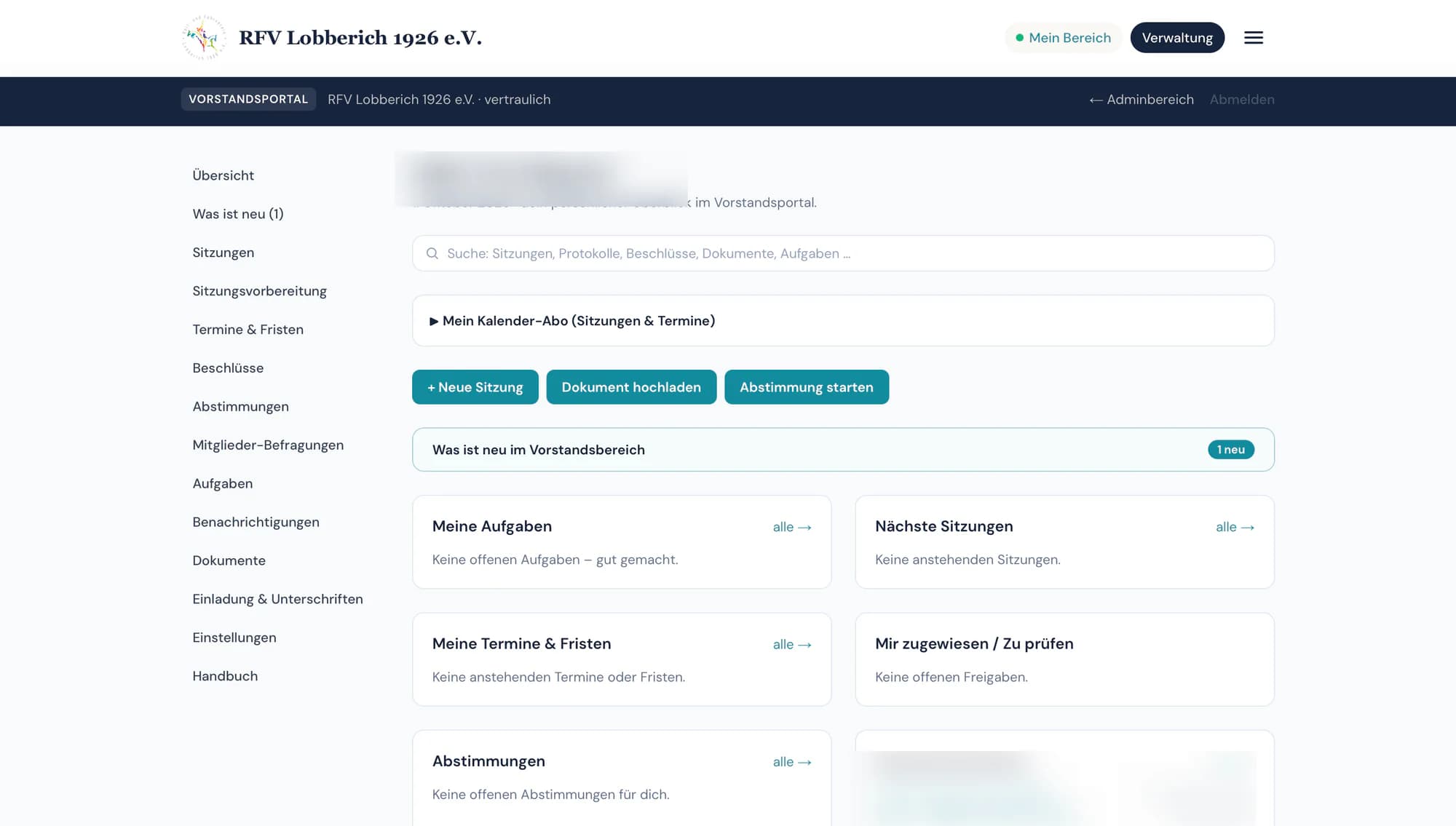
The interface brings core club operations into one shared system and remains clear and usable on the go.
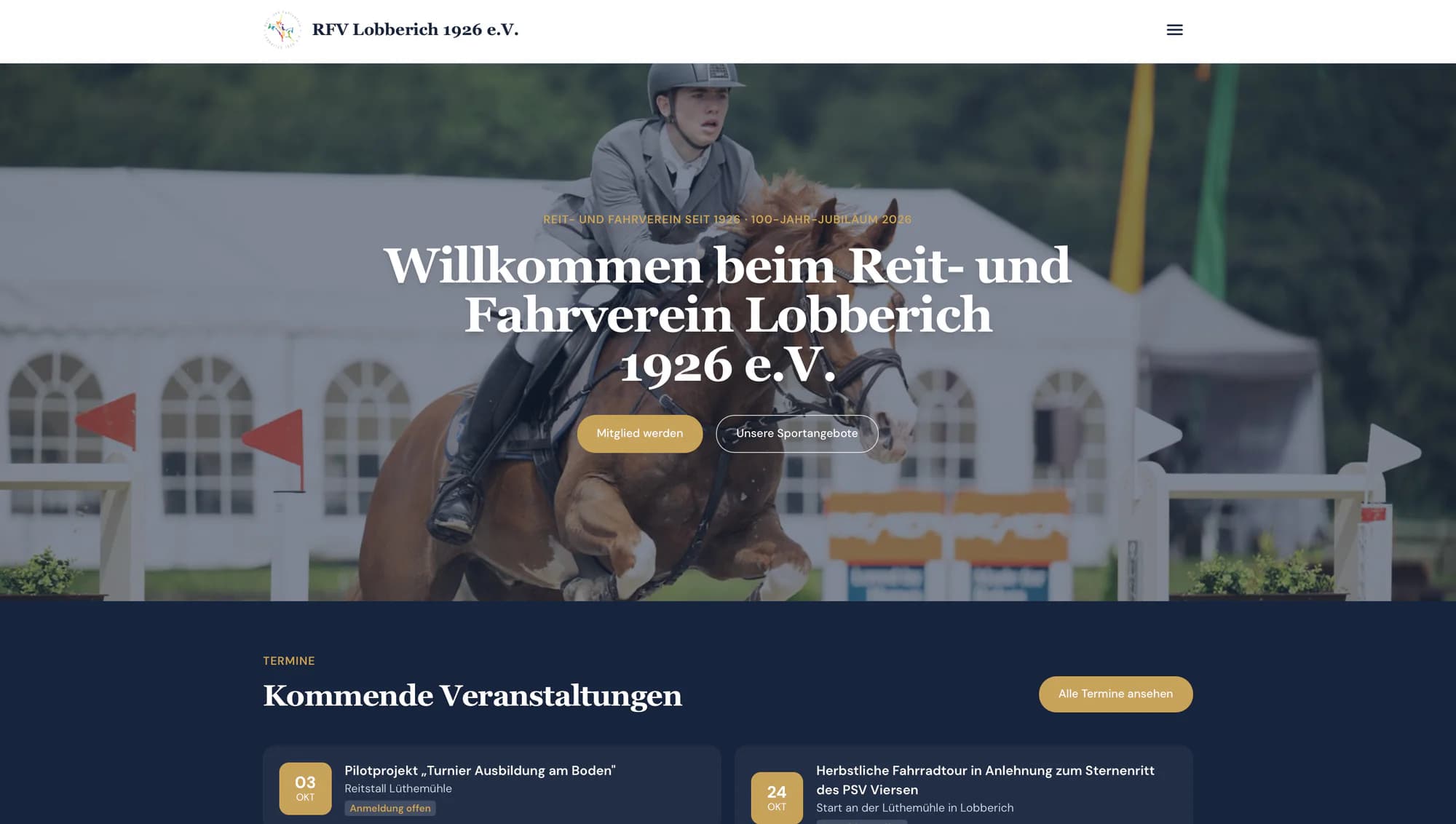
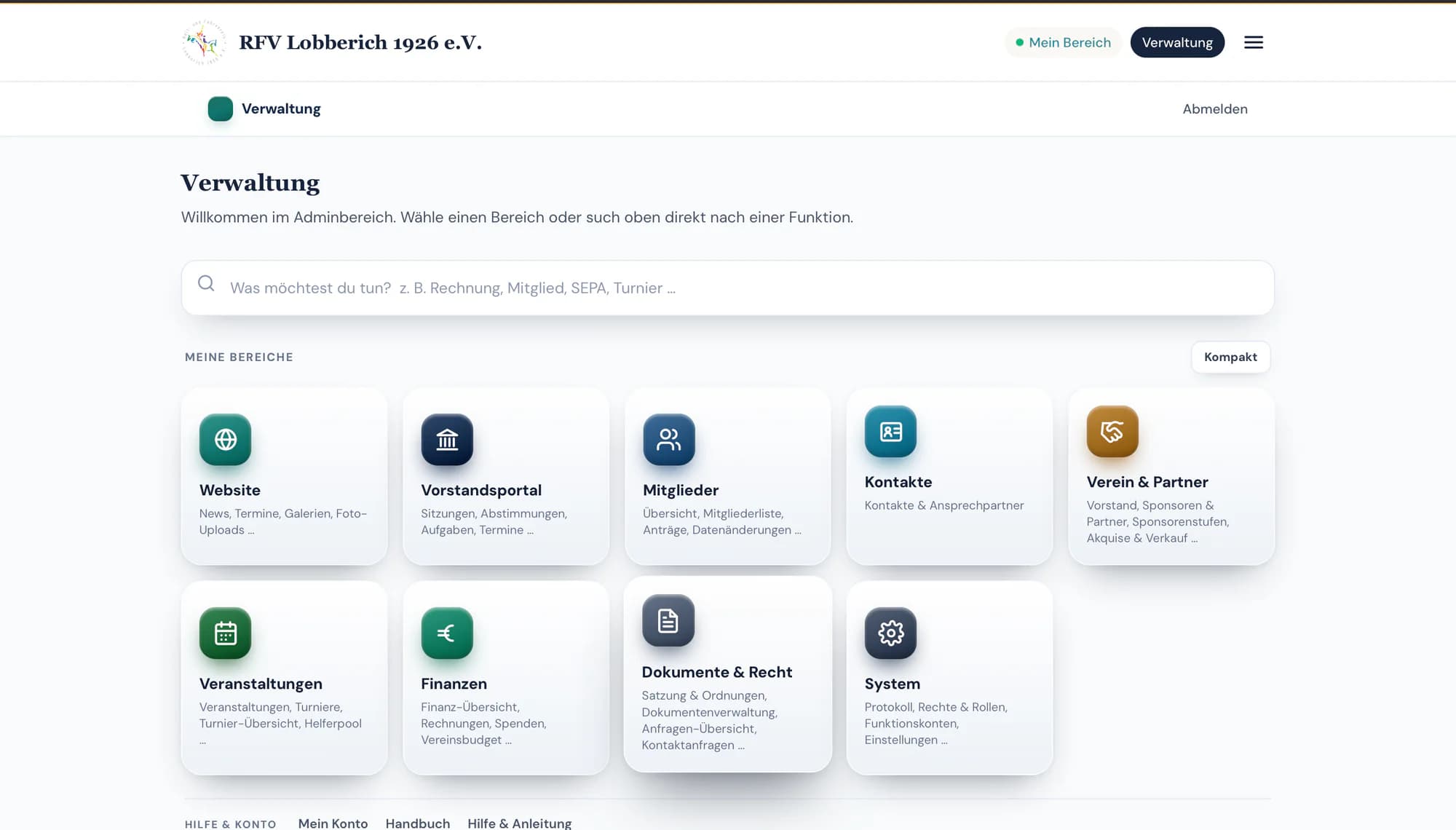
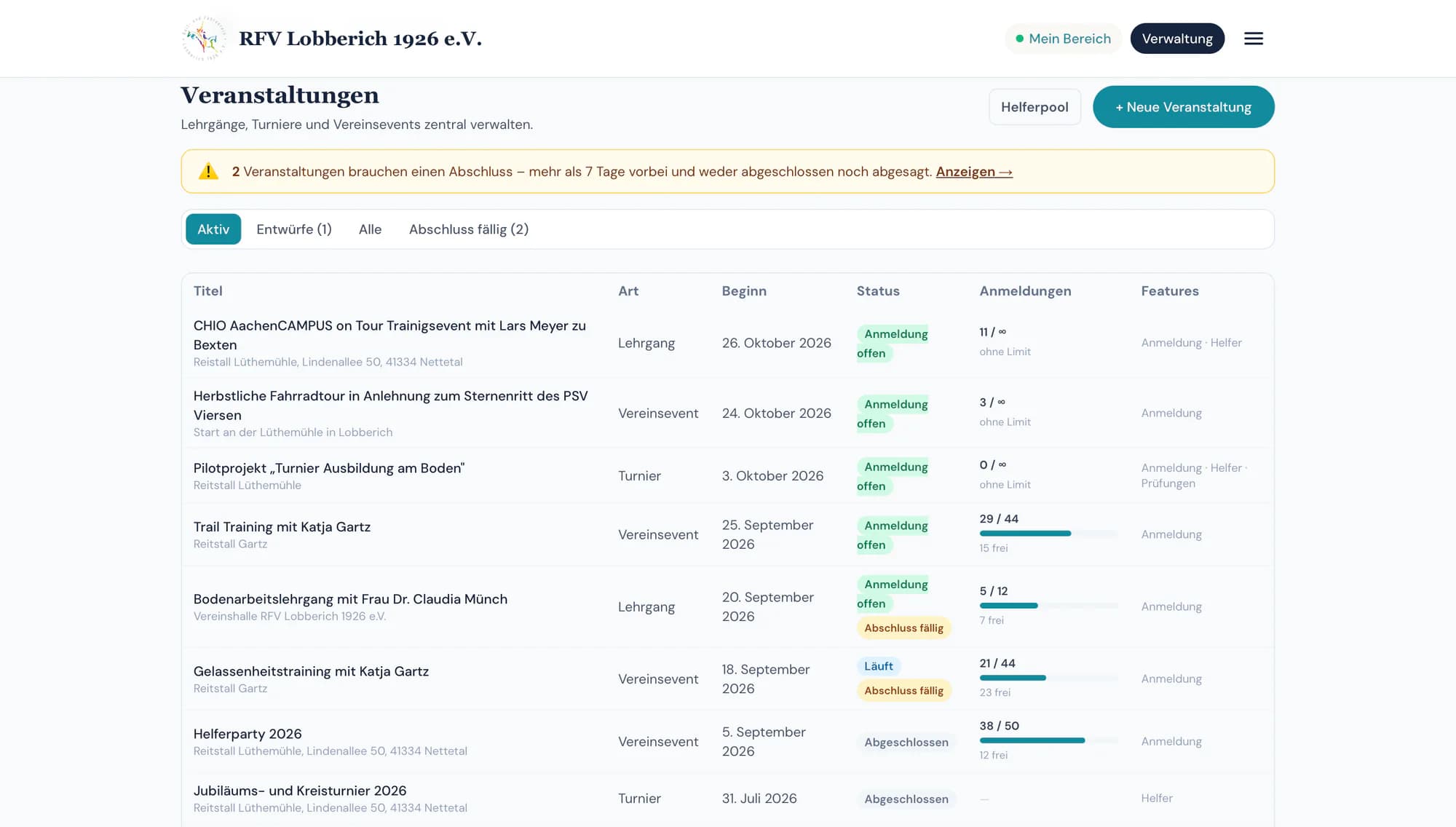
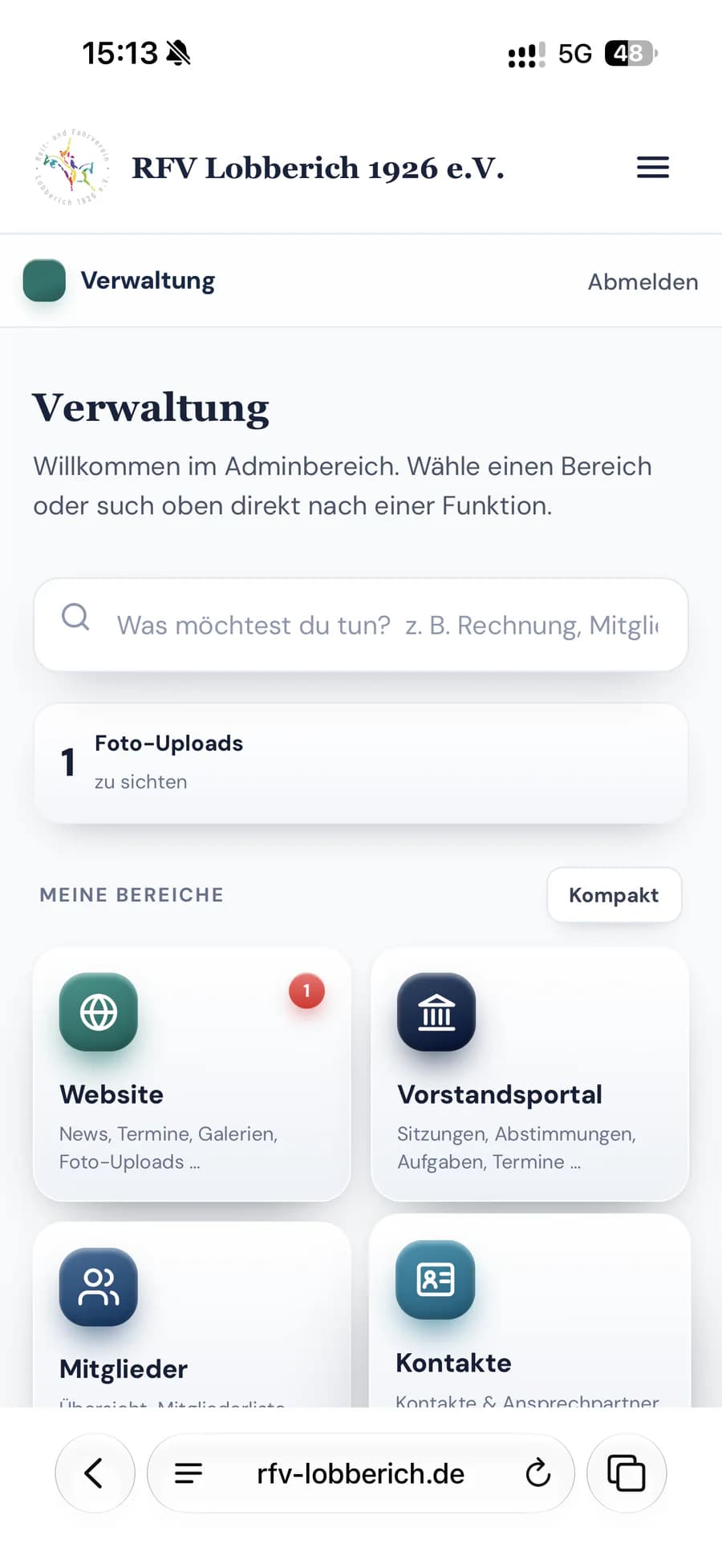
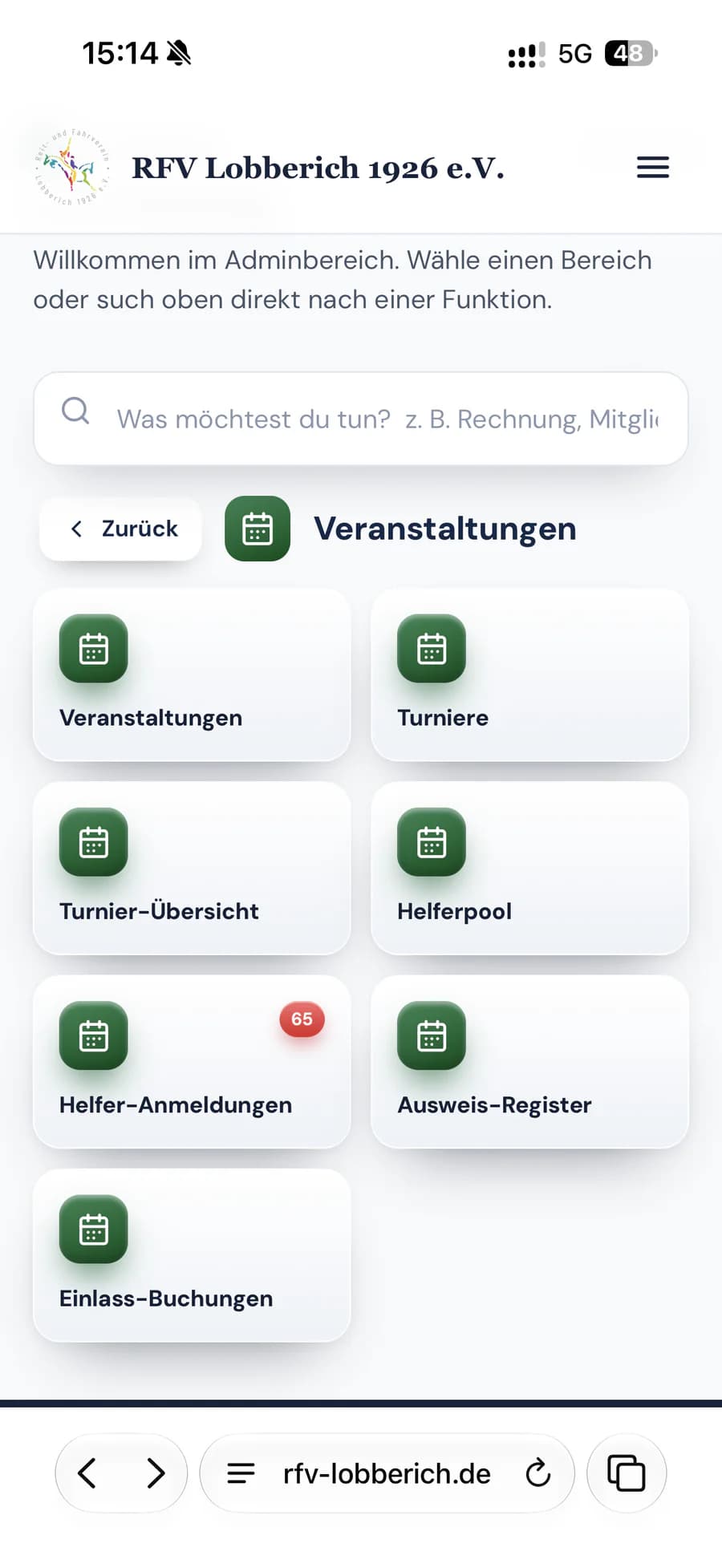
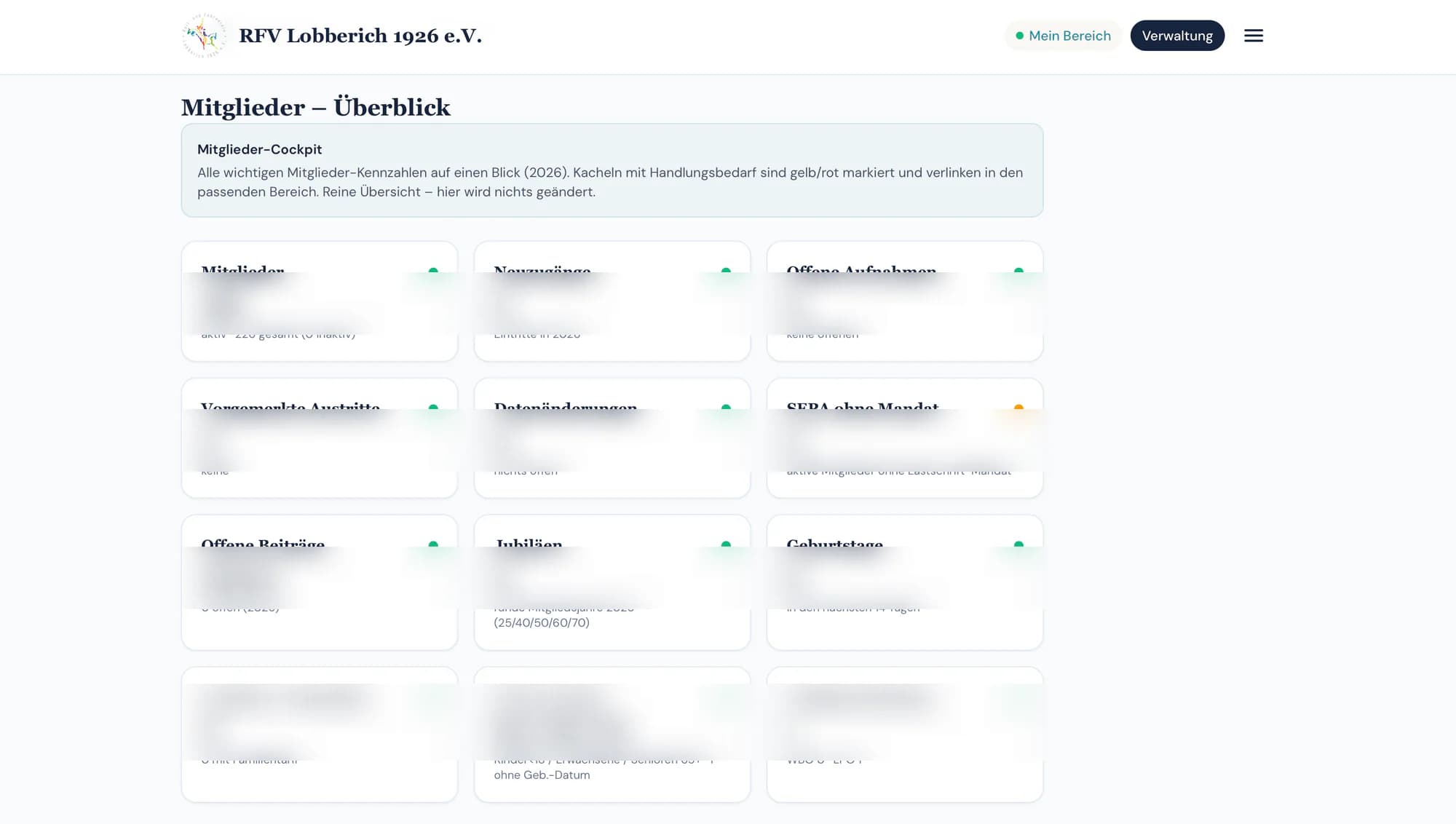
SEPA sequences, duplicate protection, waitlist promotion, reminders, retention, pre-matching bank transactions and certificate delivery follow defined rules. This is deterministic automation, not AI.
Bank data from CSV, MT940 or CAMT can enter traceable matching and open-item workflows. Budgets, donations, expenses, invoices and ZUGFeRD or Factur-X documents stay connected to their process.
CSV, MT940 and CAMT
Payments and open processes
Budgets, donations and expenses
Invoices, ZUGFeRD and Factur-X
Meetings, resolutions, voting, minutes, tasks and documents connect to operational work instead of sitting in isolated files.
Resolutions and votes remain in their context.
Tasks and documents remain available to responsible roles.
The implementation combines Next.js App Router, React, TypeScript, PostgreSQL, Prisma and NextAuth with PDF and ZUGFeRD generation and CI/CD through GitHub Actions.
Role-based access, AES-256-GCM for sensitive banking data and a SHA-256 hash-chain approach support protection and traceability.The effect is visible qualitatively in bringing previously fragmented work into one connected system, without invented metrics.
When a process is distributed across spreadsheets, email and isolated tools, it is worth looking at the system behind it.